
Hii Experience in New Mexico, is an STM Canna and RollCraft customer. Hii purchased three machines from our team to bring grinding, filling and closing into its own pre-roll operation: an STM Canna Mini-Revolution Grinder, a RollCraft MRB pre-roll filler and a RollCraft ATC automated Dutch Crown closer.
Hii gave STM Canna and RollCraft permission to share a behind-the-scenes production video of the equipment in use, check it out!
Watch Hii Experience uses STM Canna and RollCraft equipment to grind, fill and close pre-rolls in-house.
Inside Hii Experience’s Pre-Roll Workflow
The three machines Hii purchased separate material preparation, filling and closing into dedicated stages. STM Canna equipment handles the grind; RollCraft equipment handles batch filling and automated closing. That division of labor makes each stage easier to understand, staff and adjust.
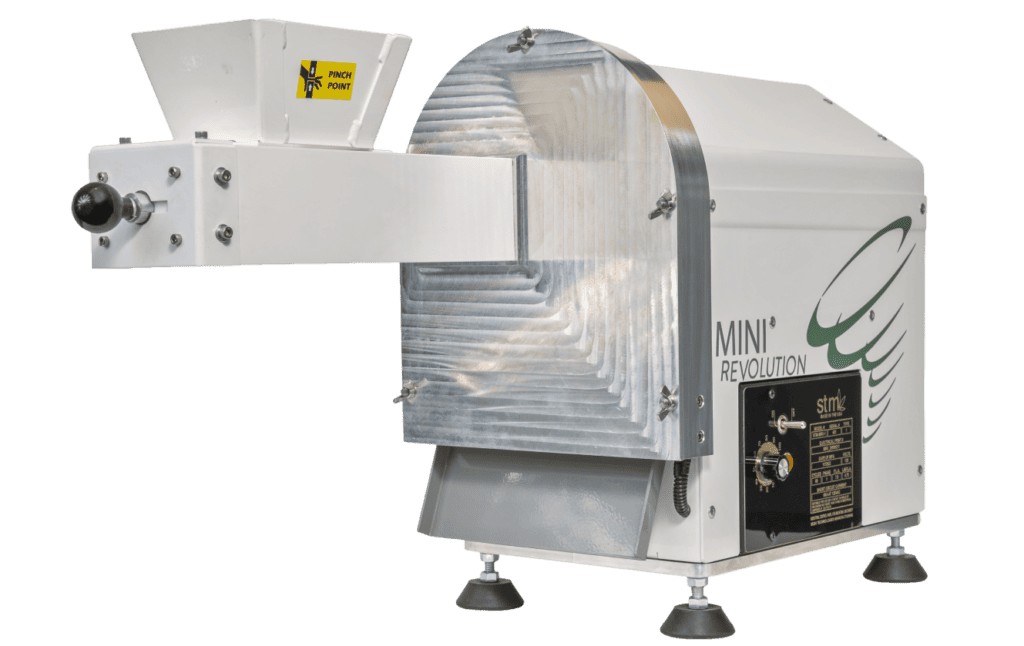
The STM Canna Mini-Revolution prepares flower for production. A repeatable fill begins before material reaches a cone. The STM Canna Mini-Revolution Grinder processes flower into a more consistent particle profile for the filling stage. In Hii’s line, it is the preparation station rather than part of a sealed, all-in-one machine.
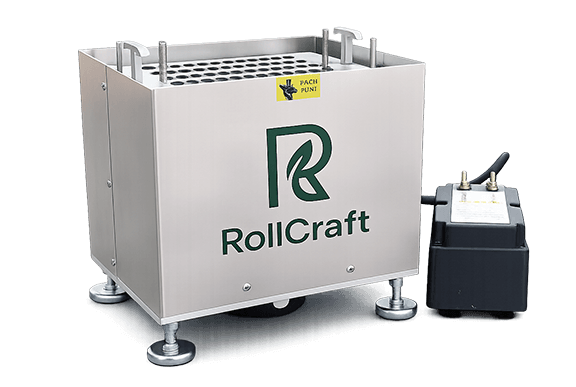
The RollCraft MRB fills pre-rolls in batches. The RollCraft MRB distributes prepared material across a tray of pre-rolled cones. Operators do not have to pre-weigh a separate portion for every cone before filling. As with any production method, the facility still needs its own weight-control and quality-assurance process.
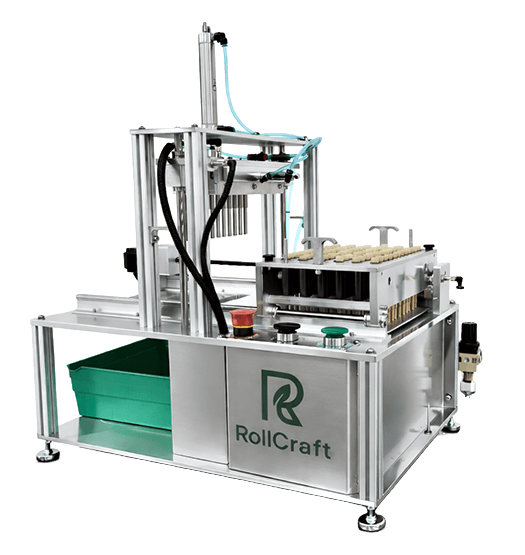
The RollCraft ATC closes the batch with a Dutch Crown. After filling and any required checks or adjustments, the tray moves to the RollCraft ATC. The ATC automates the repetitive closing step and gives the batch a flat Dutch Crown finish.
Together, the STM Canna grinder and two RollCraft machines create a clear grind, fill and close sequence. The equipment supports the same production flow, but the three machines do not have to behave like one inseparable system.
Why a Modular Tablestop System Matters
A large integrated line can make sense when volume, staffing, product mix and capital all support it. The STM Canna and RollCraft system Hii purchased shows another route: assign each production problem to a dedicated tabletop unit and connect the steps through a planned material flow.
That approach has several practical advantages for producers that need commercial equipment but still want control over how the line develops:
Use Production Space Deliberately
Tabletop units can be placed around the room, bench space, people and utilities already available.
Automate the Step That Needs Attention
A team can address filling or closing without replacing its entire production method.
Keep the Equipment Working as a System
Dedicated machines can still share a tray-based flow from filling to closing.
Change the Workflow Over Time
Stations can be repositioned, added or reassigned as products, shifts and bottlenecks change.
Enter Commercial Automation in Stages
The investment can follow the operation’s priorities rather than the architecture of a single large machine.
Modularity does require planning. Operators still need to account for staging space, tray movement, weight verification, staffing, cleaning and the handoff to packaging. The advantage is that those decisions remain visible and adjustable.
Who is This Type of Pre-Roll Automation For?
Craft Producers
Craft producers that want to preserve a hands-on process while removing repetitive filling or closing work.
Vertically Integrated Operators
Vertically integrated operators that want more control over in-house production and the pace of equipment investment.
Growing Processors
Growing processors whose current bottleneck is specific and measurable.
Teams Moving Beyond Manual Production
Teams moving beyond manual production that need a manageable first step into commercial equipment.
Businesses Avoiding Excess Capacity
Businesses avoiding excess capacity that want automation aligned with current volume, available space and near-term growth plans.
It is not the automatic answer for every facility. High-volume operations, unusual formats or tightly integrated packaging requirements may point to a different class of equipment. A useful equipment conversation starts with actual SKUs, cone sizes, daily targets, labor, room layout and quality-control requirements.
What Other Producers Can Learn From Hii Experience
Hii’s customer story demonstrates that commercial automation does not have to arrive as one oversized, all-or-nothing purchase. The company bought three STM Canna and RollCraft machines that each solve a defined part of its production process.
The lesson from Hii’s production floor is not simply to duplicate the same equipment list. It is to design automation around the work that already exists.
Start by mapping the line from prepared flower to packaged product. Note where material waits, where people repeat the same motion, where batches require rework and where space or utilities constrain the layout. Then decide which production step will create the most useful improvement if it becomes faster or more repeatable.
Hii’s setup makes that principle easy to see. The grind, fill and close stages are distinct. Each machine has a defined role. The system can be understood at a glance, and the workflow can be evaluated one station at a time.
Building a RollCraft Pre-Roll Workflow like Hii Experience
Hii’s purchased setup combines one STM Canna machine with two RollCraft machines. For producers focused on the core fill-and-finish process, the RollCraft MRB and ATC form the center of the workflow. The MRB fills a tray of cones without requiring each cone to be pre-weighed individually; the same production batch can then move to the ATC for automated Dutch Crown closing. The STM Canna Mini-Revolution supports the line upstream by preparing flower for filling.
The right configuration depends on what the operation produces today and what it expects to change next. Daily volume matters, but so do labor allocation, room layout, cone formats, batch-control requirements, cleaning routines and the handoff from closing to packaging.
Next Step
Talk to a RollCraft expert about your current production workflow. Bring your target daily volume, current staffing, cone sizes, floor-space constraints and the step that causes the most delay.
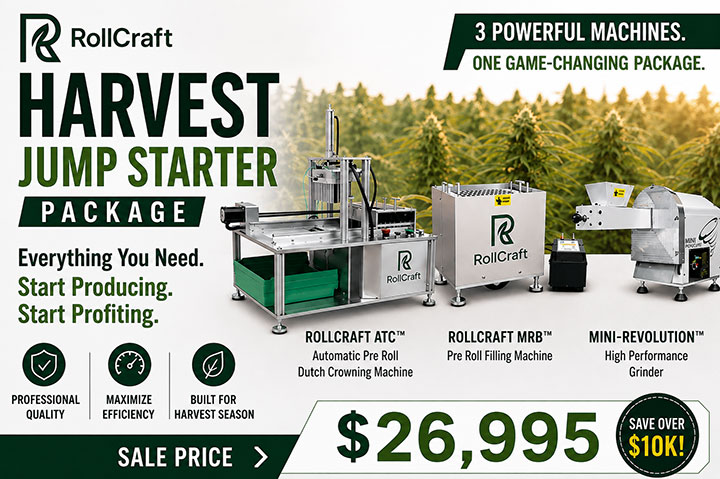
STARTER SALE
Harvest Jump Starter PackageThe RollCraft Harvest Jump Starter currently combines the Mini-Revolution Grinder, RollCraft MRB, RollCraft ATC and two additional trays for $26,995 through September 30, 2026.
Comments are closed