
The Short Answer: Build the Workflow Before You Buy the Machines
A commercial pre-roll line needs a controlled process for five connected stages: grind, load and fill, quality control and weigh, close, and package. You do not need to automate all five stages on day one. The right starting setup keeps the steps that are still consistent and affordable manual, then adds automation where labor, variation, or work-in-process begins limiting finished output.
The most important buying decision is not which commercial pre-roll machine has the highest advertised speed. It is whether the entire line can move at a balanced pace. A fast filler does not improve final output if filled trays spend the rest of the shift waiting to be weighed, closed, or packaged.
Quick equipment checklist
At minimum: a repeatable grinder and material-prep station, a cone-loading and filling method, an appropriate scale and inspection station (or rather rely on the pre-weigh technology a Rollcraft MRB can offer), a defined closing method, and compliant packaging and labeling tools. Automate the station that is creating the largest measured bottleneck.
Commercial Pre-Roll Equipment by Production Stage
| Production stage | Practical starting equipment | What can stay manual | Automate when… |
|---|---|---|---|
| Grind and prepare | Batch grinder, screens or sieves, compliant containers, cleaning tools | Inspection, screening, staging, and material transfer | Inconsistent material or slow preparation keeps the filler waiting |
| Load and fill | Cones, loading trays, filling system, material staging, spare trays | Cone loading, tray changes, and visual inspection | Hand filling or individual pre-weighing limits daily output |
| Quality control and weigh | Appropriate scale, check weights, sampling plan, pass/rework/reject stations | Sampling or individual checks while volume remains manageable | Weighing creates a queue or late rework becomes expensive |
| Close | Defined twist, fold, tamp, or Dutch Crown method; trays and inspection tools | Hand finishing for pilots, small runs, and specialty formats | Filled trays accumulate or finished appearance varies by operator |
| Package and label | Approved packages, label printer or applicator, batch verification, case supplies | Insertion, label application, final inspection, and case packing | Finished product waits for packaging or verification errors increase |
On smaller screens, swipe horizontally to view the full checklist.
Start With Output, Formats, and Floor Flow
Before comparing machines, define what the production room must actually deliver. The answer should be based on accepted, packaged units per shift—not the cycle speed of one piece of equipment.
- How many finished pre-rolls must ship per day and per week?
- Will the line run one SKU or switch between weights, cone sizes, strains, and infused formats?
- Does the product use a twist, fold, tamp, or Dutch Crown finish?
- How many operators can work in the room without creating excess handling?
- Which step currently creates the longest queue?
- What power, compressed air, ventilation, and floor space are available?
- How will equipment be cleaned between batches and product changes?
- What testing, labeling, package, and recordkeeping rules apply to the licensed operation?
Record the current time spent at each station. Include setup, loading, changeovers, cleaning, downtime, quality checks, rework, and packaging. Those observations will usually identify the first machine worth buying.
1. Grind and Prepare the Material
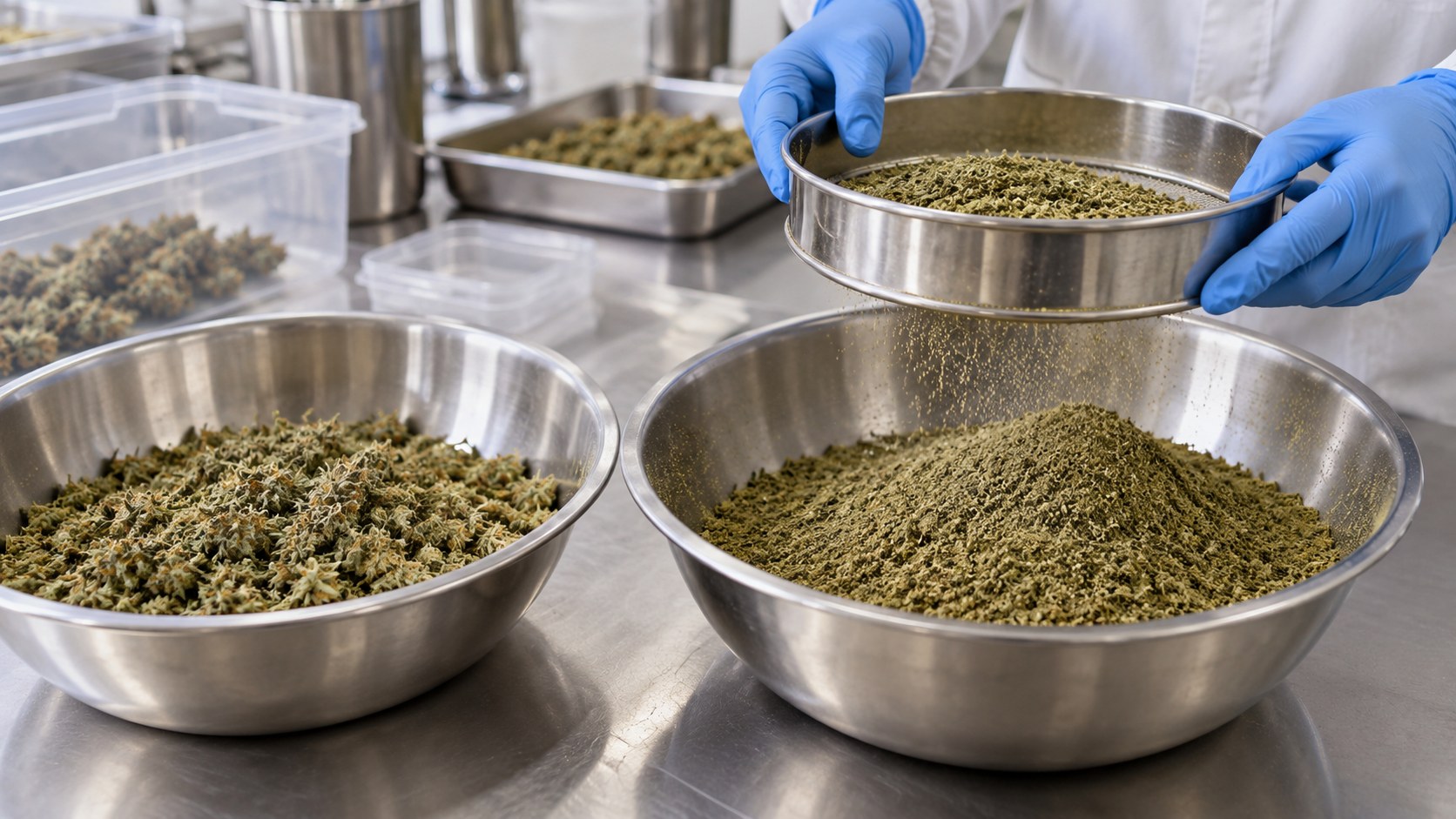
Consistent filling begins with consistent material preparation. If the grind contains an uneven mix of large pieces and fines, the material can flow and pack differently from cone to cone. The grinding station therefore affects fill distribution, draw, and the amount of rework required later.
A starting grind station commonly includes a grinder sized for the planned batch, screens or sieves appropriate to the SOP, compliant staging containers, batch identification, cleaning tools, and dust controls appropriate to the facility.
What can remain manual?
Material inspection, screening, batch staging, and transfer can remain manual. A smaller grinder is also sufficient if it can prepare consistent material faster than the filling station consumes it.
When should you upgrade the grinding station?
Upgrade when operators repeatedly wait for prepared material, when particle inconsistency creates fill variation, or when grinder labor prevents the same employee from running another station. Compare cleaning time, batch changeover, heat generation, and output consistency—not only pounds per hour.
2. Load Cones and Fill the Pre-Rolls
Filling is often the first practical place to automate because hand filling and individual pre-weighing are repetitive and difficult to scale. A commercial pre-roll machine should create a repeatable fill while supporting the team’s intended cone sizes, target weights, and changeover schedule.
The station may include cone-loading tools, loading trays, a pre-roll filling machine, material staging containers, a tamping or packing method, and spare trays that allow loading to continue while another tray is processed.
What can remain manual?
Cone loading, material transfer, tray changes, and visual inspection can remain manual. Hand filling can still make sense during product development, limited releases, or very small runs.
Where RollCraft fits
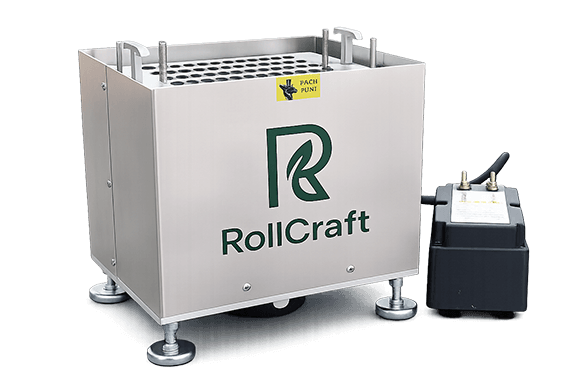
The RollCraft MRB is a modular filling option for craft and growing producers. RollCraft states that it fills 72 cones in about 60 seconds without individual pre-weighing and can support production up to 10,000 pre-rolls per day. Actual results depend on material, cone size, target weight, operators, and the surrounding workflow.

A Working Example: Hii Experience
Hii Experience in New Mexico uses an STM Canna Mini-Revolution Grinder, a RollCraft MRB filler, and a RollCraft ATC Dutch Crown closer for its in-house pre-roll operation. Its behind-the-scenes video shows a practical grind, fill, and close sequence with dedicated tabletop stations. See how the equipment works together in the Hii Experience customer story.
3. Build Quality Control and Weighing Into the Line
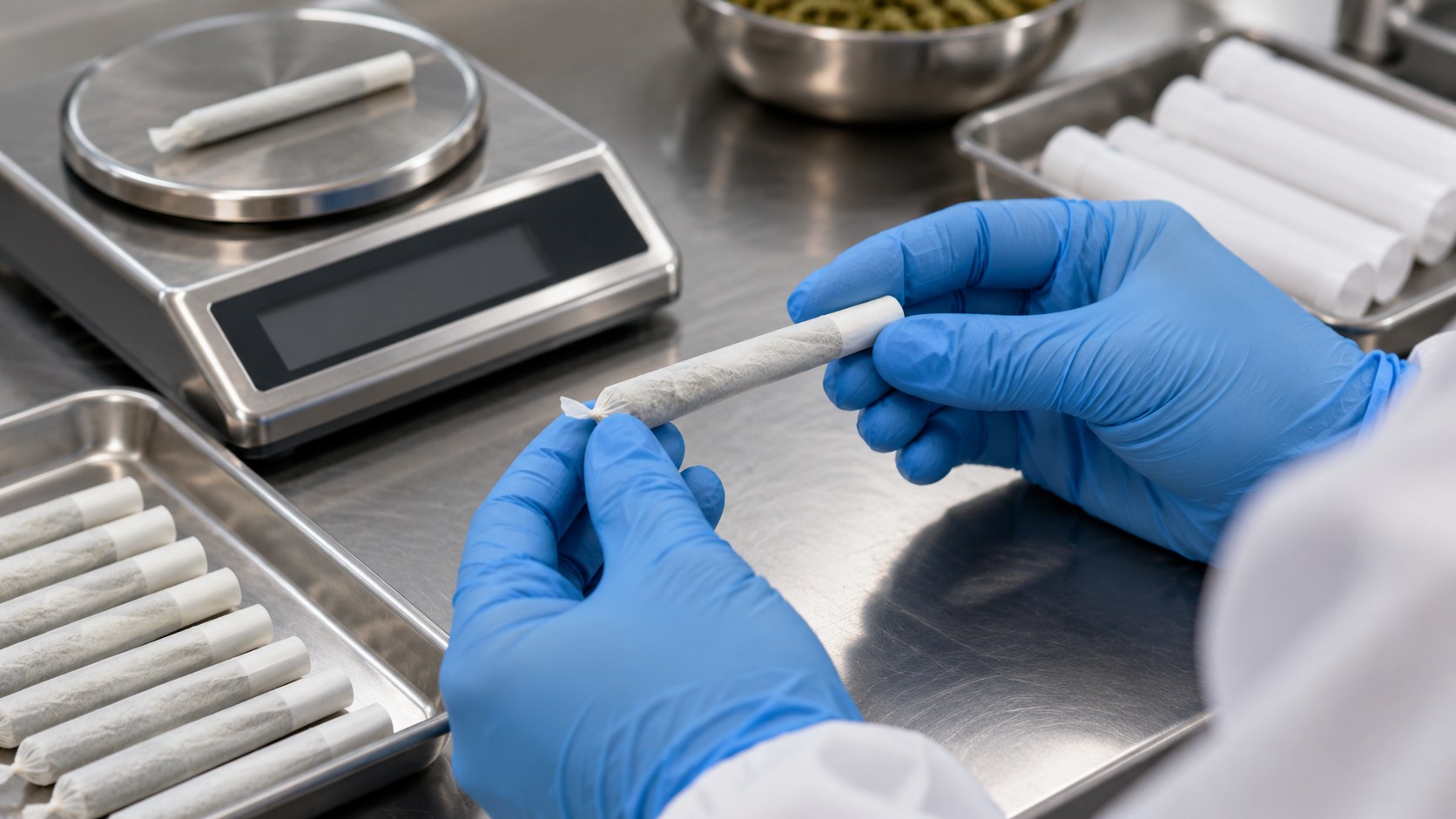
Quality control is a production station, not a final glance at the finished product. At minimum, operators need a defined method to verify target weight, cone integrity, fill condition, and acceptable finish.
- A scale appropriate for the target weight and local requirements
- Check weights and a documented verification schedule
- A sampling plan or full-check process based on the SOP and jurisdiction
- A written visual inspection standard
- Clearly marked pass, rework, and reject locations
- Batch records connected to the production run
NIST Handbook 44 provides technical requirements for weighing and measuring devices. State and local authorities determine how those standards apply, so confirm the required accuracy, readability, inspection, and registration before buying a production scale.
Manual weighing can remain sensible at modest volume because it also teaches the team where normal process variation occurs. Consider automated weighing when the QC queue slows the filler, when rework is found too late, or when the labor spent checking units has become a larger cost than solving the source of the variation.
4. Choose a Repeatable Closing Method
Closing affects appearance, material retention, and the consistency of the finished product. Common methods include twisting, folding, tamping, and forming a Dutch Crown. The starting station may need only a written finish standard, hand tools or fixtures, protective trays, and a rework area.
Keep closing manual while the team can match the filling station and maintain a repeatable finish. Automate when filled trays accumulate, multiple employees are needed to keep pace, or appearance varies significantly between operators.
For producers using a Dutch Crown finish, the RollCraft ATC automated pre-roll closer closes 72 pre-rolls in under 60 seconds according to RollCraft. It is designed to integrate with the MRB tray workflow. The ATC requires an air source, so compressed air belongs in the facility and utility plan.
5. Package, Label, and Release the Finished Product
Packaging is where the finished pre-roll becomes a retail-ready unit. The required equipment depends on whether the product uses a tube, pouch, carton, multipack, or another approved format.
- Approved primary packages
- Manual insertion tools or fixtures
- A label printer and applicator
- Batch, lot, or track-and-trace verification
- Tamper-evident or child-resistant packaging where required
- Final inspection and case-packing supplies
California’s Department of Cannabis Control packaging guidance, for example, explains state requirements for final-form cannabis goods. Packaging, labeling, testing, and transfer rules differ by jurisdiction, so the licensed operator should verify the requirements that apply to its market before selecting equipment.
Manual insertion, labeling, and case packing are often workable at launch and remain flexible while the brand tests package formats. Add automation when finished units consistently wait for packaging, label placement or verification errors rise, and the package specification is stable enough to support dedicated machinery.
Supporting Equipment Buyers Often Forget
The five production stages are only part of the purchasing plan. A functional room may also require:
- Worktables, mobile carts, tray storage, and material-safe storage
- Electrical service and compressed air that match the selected equipment
- Environmental controls appropriate to the material and process
- Cleaning, sanitation, and product-changeover tools
- Personal protective equipment and machine guarding
- Dust collection or controls identified by the facility hazard assessment
- Batch records, barcode tools, or track-and-trace access
- Spare wear parts and a maintenance area
OSHA notes that finely divided combustible materials can create flash-fire or explosion hazards when dispersed as dust. A facility-specific assessment should determine whether dust collection, housekeeping, ventilation, or other controls are needed. This article is not a substitute for safety, engineering, or regulatory guidance.
Practical Questions About Planning a Commercial Pre-Roll Line
What Equipment Is Needed for 1,000 Pre-Rolls per Day?
Start with a grinder and material-prep station, cone-loading tools, a filling method, an appropriate scale and QC station, a repeatable closing method, and packaging and labeling supplies. Automated filling can work alongside manual inspection, closing, and packaging if those stations can keep pace. A daily target by itself does not mean every step needs a machine.
Planning example: If an eight-hour shift leaves six productive hours after setup, cleaning, breaks, and changeovers, 1,000 accepted, packaged pre-rolls require about 167 finished units per productive hour. Check each station against that rate and allow additional capacity for rejects and interruptions. This is an illustrative calculation, not a measured RollCraft or customer result.
What Air Compressor Does a Pre-Roll Closer Need?
Requirements depend on the closer. The RollCraft ATC uses compressed air. Before buying a compressor, request the current operating pressure, required airflow at that pressure, connector size, and air filtration and drying requirements for the exact configuration. Tank size or horsepower alone does not tell you whether a compressor can supply the machine during repeated cycles.
Also plan hose routing, regulator access, noise, and any other equipment sharing the air supply. Have RollCraft confirm the compressor specification before ordering; this checklist does not assign an unverified PSI or CFM rating.
How Many Operators Does a Pre-Roll Production Line Need?
Count the work across the whole line: grinding, loading cones, filling, weight checks, closing, packaging, and batch records. The number of people operating the filler is only part of the staffing requirement. Product mix, inspection requirements, and package format can change the answer.
For a two-person planning trial, one operator can prepare material, load trays, and fill while the second checks weights, closes, and packages. Measure whether either person develops a queue. This is a starting arrangement to test, not a guaranteed staffing level. A one-person setup needs to account for sequential tasks and the time the machines wait while that operator handles another station.
How Much Space Does a Tabletop Pre-Roll Line Need?
Plan more than the machine footprint. Include stable worktables, space to load and unload trays, material staging, separate pass and rework locations, packaging, cleaning access, and safe operator movement. A tabletop machine may fit on a bench while the complete workflow needs several work areas.
Get current dimensions and service clearances for each selected machine, then mark the proposed layout at full size before purchasing. Walk a tray through preparation, filling, inspection, closing, and packaging. If people cross paths or trays need to move backward, adjust the layout. Confirm facility and access requirements with the appropriate professionals rather than relying on a universal square-foot estimate.
How Do You Balance Filling and Closing Capacity?
Compare accepted units per hour using the full station cycle: loading, processing, unloading, checks, and handoffs. A short machine cycle can hide a much slower station cycle. Packaging also needs enough capacity to clear the closed product.
Illustrative bottleneck: If filling supplies 300 acceptable units per hour, closing handles 200, and packaging handles 250, closing limits the line to at most 200 units per hour before other losses. Running the filler continuously would create a queue of about 100 units each hour. Improve closing or schedule filling in batches, then measure again. These numbers explain the calculation; they are not MRB or ATC performance claims.
What Should Stay Manual, and What Should You Automate First?
Keep doing a step by hand if your team can do it reliably, meet the rules, and keep up with production. Start by automating the step that slows the line or takes the most staff time. Check the results before buying more equipment.
| If this is happening… | Check this step first | What to check |
|---|---|---|
| The filler keeps waiting for ground flower | Grinding and prep | Grind size, cleaning time, screening, and having enough flower ready |
| Filling by hand or weighing each portion takes too long | Loading and filling | How long cone loading takes and whether closing can keep up |
| Pre-rolls pile up waiting to be weighed, or weight problems are caught too late | Weighing and quality checks | Scale accuracy, how often weights are checked, and how failed pre-rolls are handled |
| Filled pre-rolls pile up, or the tops look different from one operator to the next | Closing | Closing style, power and air supply, matching trays, and finished appearance |
| Closed pre-rolls wait to be packaged or labeled | Packaging | Package type, correct labels, and time to switch between products |
Related guide: scale without overbuilding
Once the room and first equipment purchase are planned, read How Modular Pre-Roll Automation Scales From 500 to 10,000 Pre-Rolls for a closer look at adding capacity in stages.
Seven Questions to Ask During a Machine Demonstration
- Can the machine run the intended cone size and target weight?
- Can it be demonstrated with material similar to what the operation processes?
- How long do product changeover and cleaning take?
- What output does an ordinary trained operator achieve during a full shift?
- What happens to the product immediately before and after the machine?
- What utilities, footprint, maintenance, and spare parts are required?
- What training, warranty, and service response are included?
If the filler can outrun closing and packaging by several hours, its maximum cycle speed is not the line’s real production rate. Balance matters more than the fastest individual machine.
The Bottom Line
A commercial pre-roll line needs a repeatable process for grinding, filling, weighing and inspection, closing, and packaging. Those functions are required. Full automation is not.
Start with real production observations. Keep the steps that still work manual, automate the largest constraint, and make sure every new machine fits the room, utilities, trays, quality plan, and downstream capacity. This creates a production line that can grow without forcing the business to purchase every machine at once.
Planning a Line Around a Daily Production Target?
Talk with RollCraft about cone formats, available labor, room requirements, and the station currently limiting finished output.
Commercial Pre-Roll Equipment FAQ
What equipment is needed to make pre-rolls commercially?
A commercial pre-roll line needs equipment or controlled workstations for grinding and preparing material, loading and filling cones, weighing and inspecting units, closing the pre-rolls, and packaging and labeling the finished product. Some stations can remain manual until production volume justifies automation.
Which part of a pre-roll line should be automated first?
Automate the station that limits total accepted and packaged output. Filling is often the first strong candidate because hand filling and individual pre-weighing require repetitive labor. Grinding may come first if material preparation cannot keep the filler supplied.
Do I need a fully automated pre-roll machine to start?
No. A modular line can combine automated filling with manual weighing, closing, and packaging. Add equipment when measured output shows that the next manual station has become the constraint.
How do I calculate the capacity of a pre-roll line?
Measure finished, accepted, and packaged units per hour. Include material preparation, loading, weighing, closing, changeovers, cleaning, downtime, rework, and packaging—not only the advertised cycle speed of one machine.
What should I ask during a pre-roll machine demonstration?
Ask the vendor to run the intended cone size, target weight, and representative material. Review actual output, fill variation, cleaning, changeovers, utilities, operator requirements, maintenance, warranty, and how the machine connects to the preceding and following production stations.
About RollCraft, Powered by STM Canna
RollCraft provides modular pre-roll filling and Dutch Crown closing equipment for craft and growing cannabis producers. It is powered by STM Canna and supported in the United States. Explore the MRB filling machine, the ATC closing machine, or contact RollCraft to discuss a production workflow.