Pre-rolls drive volume in legal cannabis. In many markets, they rank among the top SKUs by units sold and repeat purchase rate. They look simple on the shelf. They feel anything but simple on the production floor.
For many operators, pre-roll growth brings pressure before it brings profit. Labor expands fast. Training never ends. Output varies by shift. Margins tighten month after month. Automation promises relief, yet the real return often feels unclear.
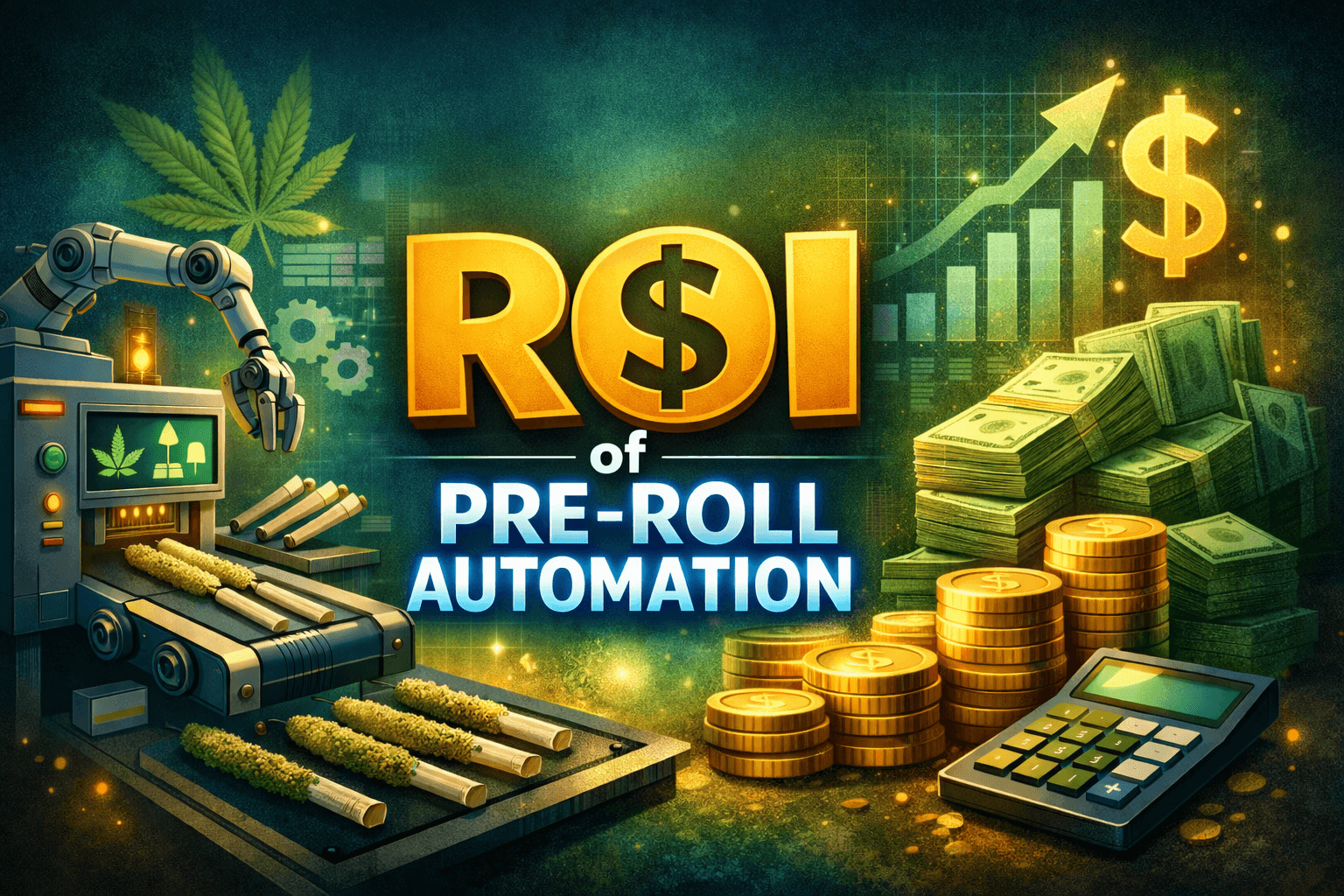
This article breaks down the true return on investment of pre-roll automation. Not the surface math. The operational math that decides whether growth stays healthy or turns painful.
Why Pre-Rolls Expose Cost Problems First
Pre-rolls scale differently than flower or extracts. Each unit needs handling. Each step invites variation. Each person adds cost.
A hand-rolled pre-roll line may produce 1,500 to 2,000 units per shift with four to six workers. Add demand and the fix looks obvious. Hire more people. Extend hours. Add overtime.
That path works for a short time. Labor costs climb faster than output. Training pulls senior staff off the floor. Consistency slips. Rework rises. Deadlines move.
The return on automation starts here. It begins when labor stops being the default answer to growth.
STM Canna identified this pattern across hundreds of facilities. It saw teams stuck between hand production and enterprise systems. RollCraft was built to close that gap .
Labor Reduction Is Only the First Layer of ROI
Most teams calculate ROI by counting labor saved. That number matters. It is not the whole story.
Automation reduces the number of hands needed per shift. A RollCraft system can replace multiple manual steps with one controlled process. That change lowers headcount growth and limits overtime needs .
The deeper return shows up in predictability.
Schedules stabilize. Training time drops. Supervisors spend less time fixing errors. Output becomes easier to forecast. These gains do not appear on a simple spreadsheet. They shape margins every week.
When labor stops expanding linearly with volume, the business regains control.
Consistency Protects Revenue, Not Just Quality
In mature cannabis markets, consistency drives wholesale trust. Buyers expect uniform weight, pack, and finish. Miss that mark and orders shrink or disappear.
Manual rolling introduces variation by default. Even skilled teams drift across a long shift. Weight checks increase. Reject bins fill.
Automation applies mechanical repeatability to each unit. RollCraft uses STM-backed design principles to hold pack and finish steady across runs .
The return appears as fewer rejects and fewer credits. It appears as repeat orders that do not require extra assurance calls. It appears as brand confidence that supports price stability.
Consistency is revenue protection.
Throughput Gains Change Time-to-Market
Speed matters in pre-rolls. New strains launch often. Limited drops drive buzz. Miss the window and demand cools.
Manual lines struggle with surges. Adding people takes time. Training delays output. Automation absorbs spikes with less disruption.
A craft-scale automated line can double daily output without doubling staff. That shift shortens launch cycles and reduces missed opportunities.
The ROI lives in captured sales. Those sales rarely show up in a labor-only model.
Automation Lowers Management Load
Every added worker adds oversight. Schedules need coverage. Breaks need coordination. Errors need correction.
Automation simplifies supervision. Fewer operators handle more volume. Processes stay consistent across shifts. Managers focus on planning instead of constant troubleshooting.
This return is quiet. It saves hours each week. Over a year, it saves weeks of management time. That time often redirects to process improvement or new product work.
Capital Risk Matters as Much as Capital Cost
Many operators delay automation due to fear of overbuying. Large systems feel risky. Budgets stretch thin. Utilization feels uncertain.
RollCraft addresses this risk by design. It targets lighter workloads and craft-scale needs. It delivers STM automation principles at a lower entry point, often 50 to 70 percent less than full pro systems .
Lower capital exposure shortens payback periods. It reduces stress on cash flow. It lets teams automate without betting the entire operation.
ROI improves when risk drops.
Modular Growth Aligns Spend With Reality
Growth rarely follows forecasts. Volumes rise unevenly. New SKUs change priorities.
Modular automation lets teams start with core steps like filling and packing. They expand as demand proves itself. This approach aligns capital spend with real data instead of projections.
The return shows up as flexibility. Money stays available for inventory, marketing, or compliance needs. Automation grows alongside the business, not ahead of it.
Downtime Costs More Than You Think
When a manual line stalls, output stops. When a key worker calls out, volume drops.
Automation reduces dependency on specific individuals. Trained operators rotate more easily. Systems follow defined routines.
RollCraft systems are designed for fast setup and simple operation. Smaller teams reach proficiency quickly .
The ROI appears as uptime. Orders ship on time. Stress stays lower during peak weeks.
ROI Looks Different for Production and Purchasing Teams
Production managers focus on hitting numbers. They care about flow, staffing, and daily targets. For them, ROI means fewer headaches and steadier output.
Purchasing teams focus on justification. They care about cost per unit, budget cycles, and supplier risk. For them, ROI means predictability and lower long-term spend.
Effective automation delivers both. It reduces cost per pre-roll over time and stabilizes operations across quarters.
RollCraft was positioned with this split in mind. It supports production needs without creating budget shock .
The Long-Term ROI Shows Up in Control
The strongest return on pre-roll automation appears over time.
Labor stops creeping upward. Output stays predictable. Quality holds steady across growth phases. Planning replaces reaction.
Manual production fails slowly. Automation prevents that slide.
Operators who automate earlier gain breathing room. They make decisions from a position of control. They scale with intent instead of urgency.
The True Question Is Not Cost
The real question is simple. What does growth cost without automation?
If volume rises next quarter, does labor rise faster. If a key employee leaves, does output suffer. If demand spikes, does the line hold.
Automation answers these questions before they turn urgent.
The true ROI of pre-roll automation is not a single number. It is stability. It is predictability. It is the ability to grow without breaking the system that supports the brand.
For many craft and mid-scale operators, that return defines the next stage of the business.
Comments are closed