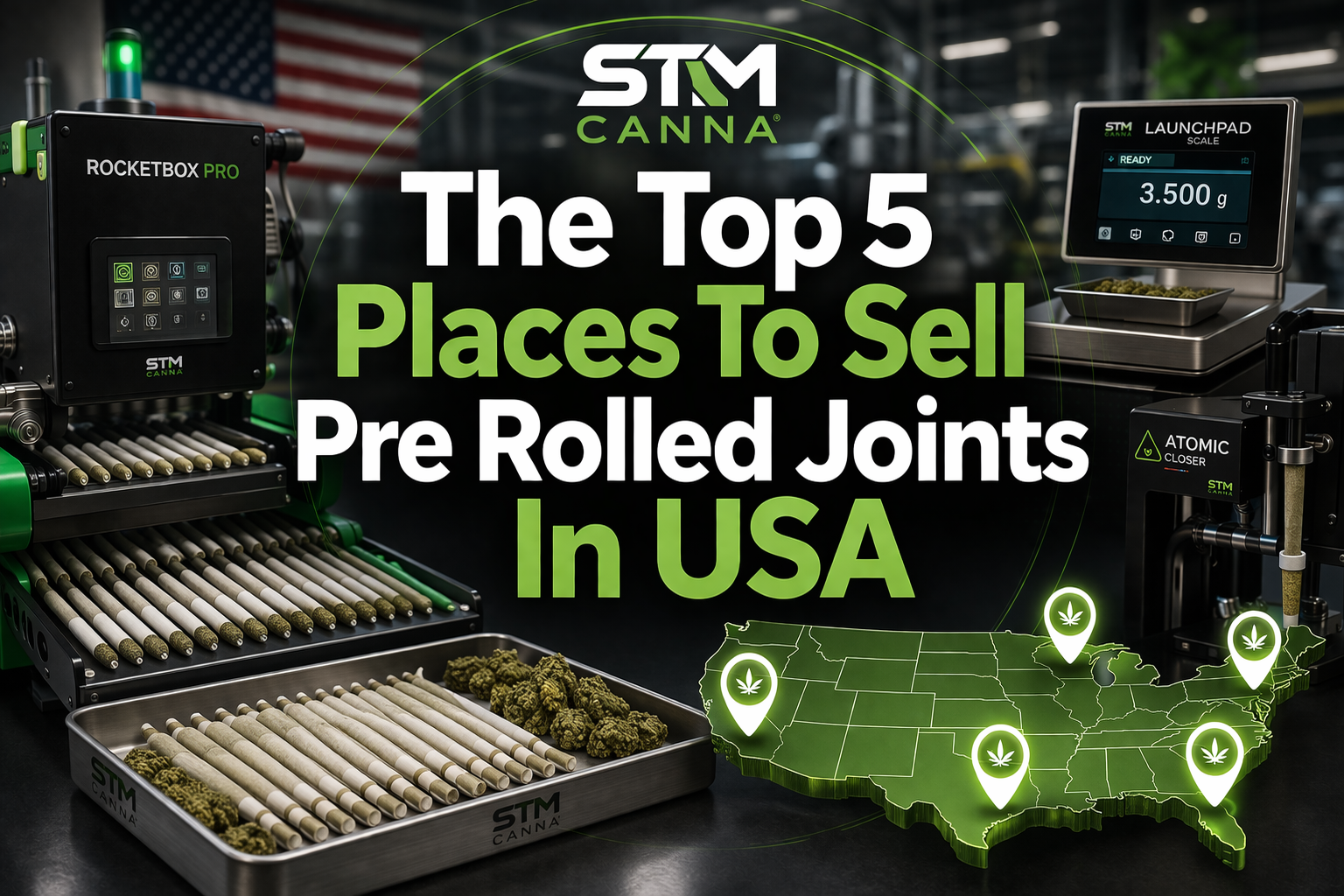
In today’s article, we will explore the top 5 places to sell pre rolled joints in the USA.
Hand-rolling 500 pre-rolls a day can eat 6 to 10 labor hours fast. And your sales plan still expects clean, consistent inventory every week.
If you’re a licensed cannabis operator, selling pre-rolls is less about “where” and more about which legal channel fits your margin, volume, and compliance limits. Cannabis stays illegal at the federal level, so sales are usually in-state only and tightly tracked.
Below are five of the most common, proven places licensed brands sell pre-rolls in the U.S., plus what each channel expects from your production line.
1) Licensed dispensaries For Pre Rolled Joints
This is the main street for pre-roll sales in the U.S.
Dispensaries already have foot traffic, budtenders, menu systems, and repeat buyers.
For brands, dispensaries can mean two paths.
- Direct-to-retail where allowed: You sell to a store under your state’s rules and tracking.
- Through a distributor or wholesaler where required: The store buys through the licensed middle layer.
Think of dispensaries like grocery shelves. If your packaging looks sharp but your weights drift, you’ll get pushed off the shelf. One bad batch can cost you the next 3 purchase orders.
Numbers that matter here:
If a retailer wants 2,000 pre-rolls per week, that’s about 400 per day on a 5-day schedule. If you’re hand-filling at 60 to 100 per hour per person, you’re staffing the problem instead of fixing it.
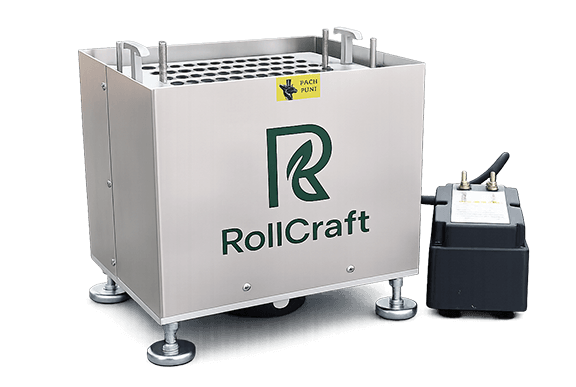
This is where automation starts to pay for itself in plain math. RollCraft’s MRB pre-roll filling machine made by STM Canna is built for craft and mid-market teams and runs up to 143 pre-rolls per minute. It also skips pre-weighing and uses a patented Nitrogen Enhanced Particle Lock filling approach.
2) Licensed delivery retailers For Pre Rolled Joints
Delivery keeps growing because customers love convenience.
In many markets, delivery is regulated as part of a retailer license or a specific delivery approval, depending on the state.
If dispensaries are grocery shelves, delivery is like pizza night. Customers expect speed, accuracy, and a product that shows up intact.
Pre-rolls do well here because they’re easy to reorder. A customer buys a 5-pack once, then comes back every 7 to 14 days if the smoke stays consistent.
What delivery channels demand from brands:
- Packaging that doesn’t crush in transit
- Closures that don’t pop open
- Lot and compliance labels that don’t smear or peel
A loose crown can turn into a return, and returns create paperwork nobody wants on a Friday.
If you’re running Dutch Crown style closures, consistent closing is the difference between “premium” and “problem.” RollCraft’s ATC automated Dutch Crown closing machine is designed for consistent crown closes at craft scale.
3) Pre Rolled Joints Wholesale distribution networks
In some states, you can’t just drive product to every store yourself.
Distribution rules can require a licensed distributor to transport, test-route, and move products through the legal supply chain. California is a well-known example with a defined distribution role.
This channel is how brands go from “we’re in 3 stores” to “we’re in 30.”
The tradeoff is simple.
Wholesale often lowers price per unit, but it can raise your total volume fast.
That’s great until your production floor becomes a traffic jam.
Here’s a real-world example. A distributor lines you up with 15 retailers. Each wants 100 pre-rolls per week to start. That’s 1,500 per week. If that pilot works, it can jump to 5,000 per week without warning.
Wholesale rewards brands that can hit volume without chaos.
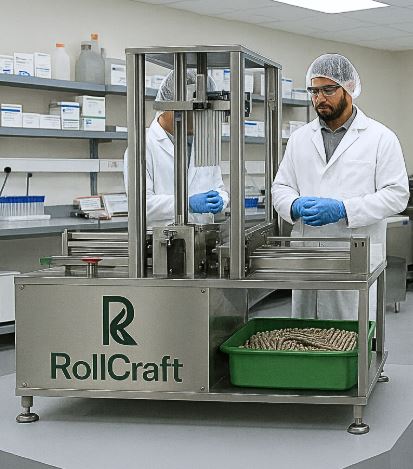
RollCraft was built for that middle zone where you’ve outgrown hand work, but you’re not buying massive enterprise systems. STM Canna created RollCraft to fill that automation gap for small and mid-sized operators.
4) Online menus and local marketplaces that route to licensed retailers
Most consumers don’t “walk in and browse” anymore. They search menus on their phones.
That’s why online platforms and menu marketplaces can be a real sales channel, even though the final sale still runs through a licensed retailer.
Two well-known examples are Weedmaps and Leafly, which help customers find dispensaries and place pickup or delivery orders where available.
For brands, this works like local SEO with a cash register attached. If your pre-roll SKU shows up in search results inside a city, it can move fast.
What wins on menus:
- Clear strain naming that matches labels
- Consistent pack sizes like 1g singles or 5-pack minis
- Fewer quality issues, since bad reviews live forever
If your “1g” joint varies from 0.85g to 1.15g, customers notice. Budtenders notice faster.
This is where steady filling and reliable closing stop being “production details.” They become marketing.
If you want a simple production goal for menu success, aim for less rework per 1,000 units and a repeatable finish on every crown. Your returns should trend toward 0, not “we deal with it.”
5) White-label and co-manufacturing Pre Rolled Joints partnerships
Not every pre-roll program needs to be a consumer brand.
Some producers make serious money by producing for other brands.
White-label is the quiet workhorse channel. It’s also the fastest way to get crushed if your line can’t stay consistent.
A partner brand will ask questions like:
- Can you hit 10,000 units by next Friday
- Can you match a tight spec like 0.5g minis across 20,000 pieces
- Can you keep rejects under 2%
If you miss one deadline, the brand finds another producer.
This channel is where modular equipment helps. You can start with the step that’s slowing you down, then add capacity as demand grows.
RollCraft’s modular approach is designed for that. Operators can start smaller and scale production without replacing the whole setup. The MRB filler is $3,500, the ATC closer is $24,995, and the bundle is $29,995. RollCraft equipment is also made in America with durable, non-plastic construction.
The “don’t get burned” rule: keep it legal and keep it in-state
Even in legal markets, cannabis remains federally illegal. That shapes everything.
Most licensed operators must sell within their state system, follow track-and-trace rules, and use the correct license types for manufacturing, distribution, and retail activity.
If you’re planning expansion, treat every new state like a new business. Different rules, different licenses, different timelines.
Quick ROI reality check for Pre Rolled Joints channels
You don’t need a fancy spreadsheet to sanity-check your next step.
Ask three questions:
- How many pre-rolls do we need per day to keep shelves stocked
Example: 2,000 per week equals 400 per day on a 5-day schedule. - How many labor hours does that take right now
Example: 400 per day at 80 per hour per person equals 5 labor hours per day. - What happens when that doubles
Because it will. It always does.
If your answer is “we hire two more people,” you already know the ending. Training time grows, consistency slips, and you spend more time managing than producing. That’s the gap RollCraft was built to close, backed by STM Canna’s broader pre-roll automation history across the market.
FAQs
What are the best legal places to sell pre-rolls in the U.S.?
Licensed dispensaries, licensed delivery retailers, wholesale distribution networks, online menus that route to licensed retailers, and white-label partnerships are five common channels.
Can I sell pre-rolls online and ship them to other states?
In most cases, no. Cannabis remains federally illegal, and state-legal programs are usually built for in-state commerce under that state’s license system.
What do dispensaries look for in a pre-roll brand?
Consistency, low return rates, compliant packaging, and the ability to restock on time.
What’s the fastest channel for a new pre-roll producer?
A few local dispensary relationships or a white-label partner can move faster than broad wholesale, if your compliance and production are tight.
How do I know I’m ready to scale pre-roll production?
If you’re missing weekly quotas, running overtime, or reworking a noticeable share of units, your line is telling you it’s time.
Your next step
Pick one channel from the list and write down a weekly number you want to hit, like 1,000 pre-rolls per week or 5,000 per week. Then back into daily output and labor hours.
If you want to pressure-test your numbers, the cleanest path is to talk with a pre-roll equipment specialist. RollCraft is designed for craft and mid-market producers who need real automation without buying oversized systems. If you’re ready, use the contact form, request a quote, or call sales to map out a setup that fits your volume and your state.
Comments are closed