
Hand-rolling 500 pre-rolls a day looks manageable until the reviews show up.
One customer gets a perfect draw and comes back next week. Another gets a tight pack that runs like a clogged straw and never buys again. Both bought the same SKU. Both tell a friend. That’s the part most brands miss.
Inconsistent pre-rolls don’t just create a quality issue. They create a trust issue. Trust costs more to rebuild than a rejected batch ever did.
This article breaks down the hidden ways inconsistency hits your brand, your margins, and your ability to scale. It also lays out practical fixes that don’t require you to jump straight into oversized enterprise systems.

Inconsistent pre-rolls teach customers not to believe you
Your label makes a promise. The joint has to keep it.
When pre-rolls vary from unit to unit, shoppers start guessing. They ask questions like these.
- “Will this one canoe?”
- “Will it burn for 6 minutes or 16?”
- “Is it going to be harsh again?”
That guessing turns your best marketing into noise.
Here’s what inconsistency looks like in the real world.
- Weight drift: a 1.0g pre-roll that lands at 0.85g or 1.10g changes the whole smoke.
- Pack density swings: too tight equals poor airflow. Too loose equals runs and ash fall.
- Bad closures: a loose crown, twisted paper, or sloppy finish looks cheap fast.
Even if only 5% of your units smoke “off,” shoppers don’t remember the 95. They remember the one that ruined the moment.
Think of it like a favorite coffee shop. If your latte is great 9 times, then burnt on the 10th, you start scanning for alternatives. Cannabis shoppers do the same.
Wholesale pre-rolls buyers notice variability faster than customers do
Retail staff hears everything. They hear “it burns weird” and “it’s tight again” all day. Then they decide what they reorder.
Wholesale doesn’t reward brands that are “usually fine.” It rewards brands that run clean and repeatable, week after week.
Inconsistency creates three quiet problems with wholesale relationships.
- More credits and replacements
If just 20 out of 1,000 units get returned or comped, that’s not only lost revenue. It’s staff time and friction. - Less shelf confidence
Budtenders stop recommending you when they can’t predict the experience. - Harder expansion into mature markets
In competitive states, “good enough” gets crowded out fast. Buyers pick the line that creates fewer headaches.
It’s like selling tires. If the tread looks different on every tire, nobody wants to bet their car on it.
Consistency is a sales tool. You feel it most when you don’t have it.
Pre-rolls Quality issues usually start with labor, not intention
Most teams don’t choose inconsistency. It sneaks in through normal day-to-day pressure.
Here’s what causes it on the floor.
- Training drift: one new hire packs tight, another packs loose.
- Fatigue: the 300th unit of the day isn’t packed like the 30th.
- Material changes: humidity shifts, grind shifts, paper shifts, flower shifts.
- Workarounds: when a tool slows down, people “fix” it by hand in the moment.
If your line relies on perfect human execution, your output relies on luck. That’s not a strategy.
Picture a band playing live. If every show depends on a new drummer learning the songs that morning, the crowd hears it. Your customers hear your process the same way.
Labor scales in a straight line. Demand rarely does.
The hidden cost is rework, rejects, and lost time on pre-rolls
Inconsistency steals minutes, then hours, then weeks.
A small defect rate turns into big production drag because every defect has a second cost. Someone has to catch it, fix it, document it, or toss it.
Let’s use simple math.
- You run 2,000 pre-rolls per day.
- 3% need rework due to tight packs, bad crowns, or weight variation.
- That’s 60 units touched twice.
- If each rework takes 45 seconds, that’s 45 minutes of extra labor daily.
- Over 5 days, that’s almost 4 hours burned on work you already paid for once.
Now add the bigger losses.
- Missed drop dates
- Extra testing and hold time
- Scrambling to hit weekly quotas
- Lower team morale from constant “fix it” mode
It’s like a leaky bucket. You keep pouring more labor in, then wonder why the volume never feels stable.
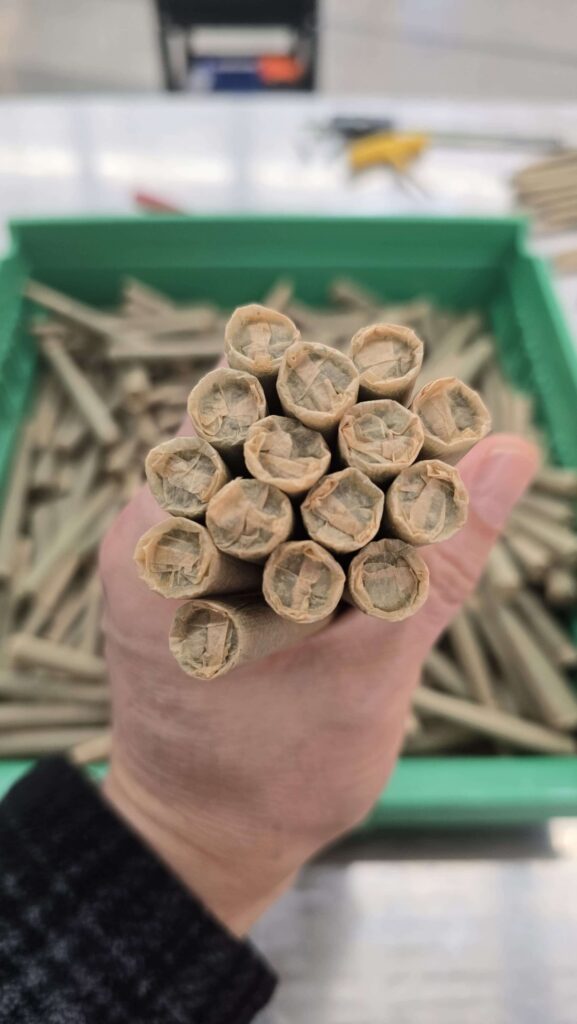
Pre-rolls consistency becomes easier when you standardize the most sensitive steps
Pre-roll quality usually breaks at two points.
- Filling and density control
- Closing and presentation
If those steps stay consistent, the rest of your process has room to breathe.
That’s why many craft and mid-market operators look for targeted automation. Not a massive all-in-one line. Just dependable control where variability hurts the most.
RollCraft was built for that gap.
A practical example of modular automation
- MRB pre-roll filling machine: $3,500
Runs up to 143 pre-rolls per minute, weighs 26 lbs, uses patented Nitrogen Enhanced Particle Lock filling technology, and doesn’t require pre-weighing. - ATC automated Dutch Crown closing machine: $24,995
Focuses on consistent Dutch Crown closures, so your finish looks the same unit to unit. - Bundle price: $29,995 for MRB + ATC.
RollCraft’s approach is modular. Start with one machine, then scale as your production grows. You’re not locked into a fixed capacity that only makes sense if you’re already huge.
That matters because many all-in-one machines are structurally mismatched for smaller operations. They’re big, expensive, and they tend to assume you’ve got a maintenance bench and a spare operator ready at all times.
RollCraft is also Made in America, built with durable non-plastic construction, and designed for craft and mid-market producers, not large-scale enterprise.
It’s like building a kitchen. You don’t buy a full restaurant line to cook 200 meals a day. You buy the right stations first, then add stations when demand proves it.
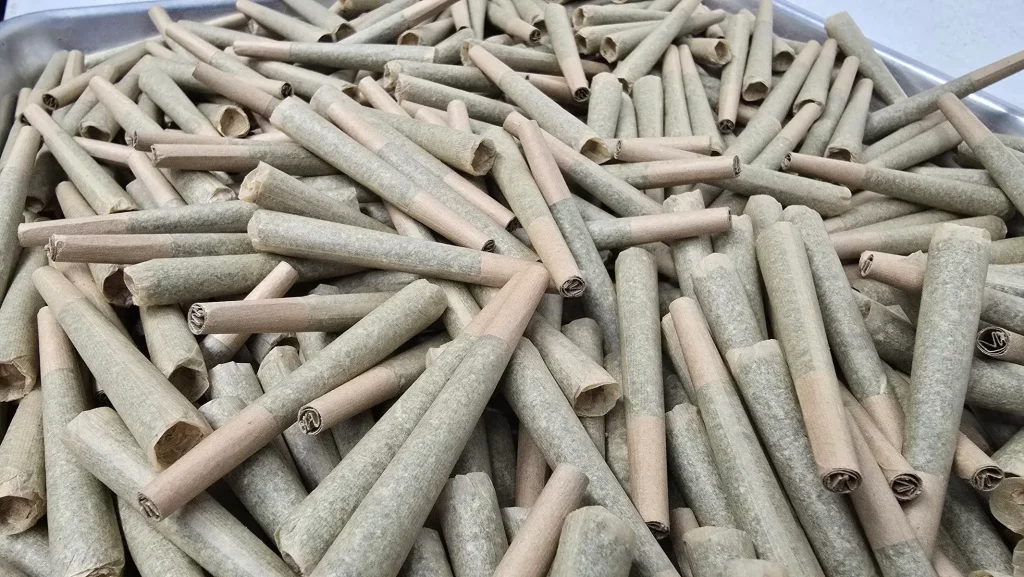
Brand trust gets stronger when pre-rolls output gets predictable
Consistency isn’t only about fewer complaints. It changes how your team runs.
When output becomes predictable, you can:
- Plan weekly production with fewer emergency shifts
- Hit drop dates with less chaos
- Train faster because the process is repeatable
- Hold a tighter standard as you add SKUs
This is where STM Canna’s track record matters.
STM’s equipment and technology have supported 1B+ pre-rolls processed, work with 50% of the top 20 U.S. pre-roll companies, operate across 44 states and 14+ countries.
RollCraft just started shipping, so there’s no published RollCraft customer ROI data yet. The smarter way to think about ROI today is basic labor math paired with proven automation credibility.
If inconsistent pre-rolls are costing you even 1–2 hours per day in rework, that’s 5–10 hours per week you can redirect into growth. That’s not hype. That’s time your team already spends.
Quick answers people ask about inconsistent pre-rolls
What causes inconsistent pre-rolls?
Most inconsistency comes from variable packing pressure, grind changes, training drift, and manual finishing errors.
Do inconsistent pre-rolls hurt repeat purchases?
Yes. Shoppers remember the bad smoke more than the good label, and they switch fast.
What’s the fastest way to improve consistency?
Standardize filling density and closing quality first. Those two steps drive most “this one smoked wrong” feedback.
Is automation only for big operators?
No. Modular equipment lets craft and mid-market teams automate one step at a time instead of buying an oversized full line.
The next question you should ask on your own pre-rolls floor
If your best pre-roll tech called out tomorrow, how close would your product stay to your standard?
That’s the real test. It forces you to see whether your “quality” lives in a process or in a person.
If you want to talk through your volume, your workflow, and where inconsistency is sneaking in, take the direct path. Let’s chat on the phone or through email.
Comments are closed